

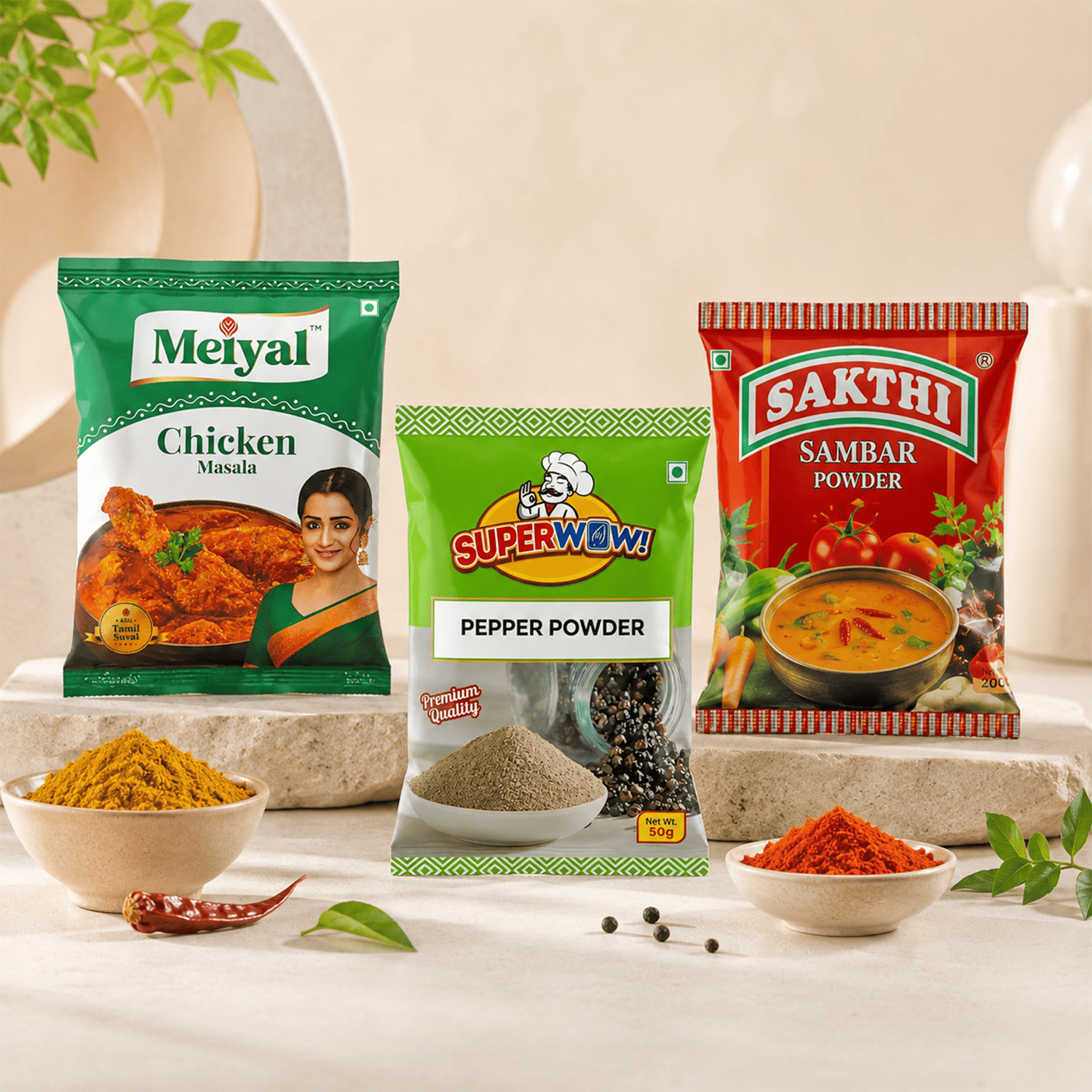
10 Must-Have Masalas for Every South Indian Kitchen
Discover the must-have masalas that bring authentic South Indian flavours to your kitchen. From sambar and rasam powder to everyday essentials like turmeric, chilli, and coriander, this guide covers the key spices you need for delicious home cooking in 2026.
10 Must-Have Masalas for Every South Indian Kitchen
Walk into any South Indian kitchen, and you will find something that no recipe card can fully capture: the smell of freshly ground masala warming in hot oil. That distinct aroma, deep and layered, is the soul of South Indian cooking.
Whether you are cooking a weekday sambar in Chennai, a slow-simmered chicken curry in Hyderabad, or a coastal fish dish in Kerala, the masalas you use determine everything. The right spice blend does not just add heat. It builds the flavour base that makes a dish taste like it was cooked with memory and intention.
If you have ever wondered which masala powders you actually need in your pantry, and which ones earn permanent shelf space, this list is for you.
The Essential Indian Masala Powder List for South Indian Cooking
These are not fancy or niche powders. Every masala on this list is a basic for cooking across Tamil Nadu, Karnataka, Kerala, Andhra Pradesh, Telangana, Pondicherry, and Goa. Together, they cover the full range of everyday dishes your kitchen will produce.
1. Sambar Powder
Sambar powder is arguably the most important masala in a South Indian kitchen. It is a blended mix of roasted coriander seeds, dried red chillies, cumin, curry leaves, and lentils, the exact proportions varying by region and family tradition.
A good sambar powder does three things: it adds depth, a mild smokiness, and a slightly tangy undertone that ties the whole dish together. Beyond sambar, it works beautifully in kootu, poriyal, and lentil-based gravies.
2. Rasam Powder
Rasam powder is lighter and more aromatic than sambar powder. It typically contains black pepper, dry red chillies, cumin, coriander, and turmeric in proportions that lend rasam its signature sharp, warming quality.
A common kitchen mistake is using sambar powder as a substitute for rasam powder. The result tastes flat. These two are distinct, and both deserve their own place in your masala list for kitchen use.
3. Turmeric Powder (Haldi)
Turmeric is not just a spice; it is a kitchen habit. You reach for it almost without thinking. A pinch goes into rice water, dal, any curry base, pickles, and even milk before bed.
Its mild earthiness and bright yellow colour are familiar to every South Indian cook. More importantly, turmeric is known for its anti-inflammatory properties, making it one of those basic masala additions that doubles as a wellness ingredient.
4. Red Chilli Powder
South Indian food has a reputation for heat, and red chilli powder is largely responsible for it. But good red chilli powder is not just about spice; it also brings colour and a fruity depth to a dish.
Byadagi red chillies from Karnataka give a deep red colour with moderate heat. Guntur chillies from Andhra bring intense heat. Kashmiri red chilli powder gives colour with very little fire. Knowing which to use, and when, is part of cooking well.
5. Coriander Powder (Dhaniya Powder)
Coriander powder is the workhorse of the South Indian spice rack. It adds a citrusy, slightly sweet warmth that rounds out sharper spices. Almost every curry base in Tamil Nadu, Karnataka, and Kerala starts with a combination of coriander powder, turmeric, and red chilli powder.
Fresh, well-ground coriander powder has a distinct fragrance. If yours has lost its smell, it has lost most of its value.
6. Cumin Powder (Jeera Powder)
Cumin powder brings an earthy, warm note that bridges the gap between hot and aromatic. It appears in dal tadka, spiced buttermilk, chutneys, and meat marinades across South India.
Both whole jeera and jeera powder have their uses. The powder blends into gravies and dry rubs without the crunch of whole seeds, useful when you want cumin flavour in the background rather than the foreground.
7. Garam Masala
Garam masala is the finishing touch. It is typically added at the end of cooking, stirred in just before you turn off the flame, so the volatile oils in cinnamon, cardamom, clove, and black pepper remain alive in the dish.
While garam masala is more prominent in North Indian cooking, South Indian recipes increasingly use it in biryani, chicken gravies, and meat curries. The key is restraint; a little goes a long way.
8. Biryani Masala
A proper biryani masala is a complex blend that includes whole spices, star anise, stone flower (kalpasi), and dried rose petals in some regional variations. It gives biryani its distinctive warmth and floral depth.
Tamil Nadu-style Ambur biryani, Hyderabadi dum biryani, and Malabar biryani from Kerala all use slightly different spice profiles. A quality biryani masala powder saves you from sourcing ten separate whole spices and still delivers that layered result.
9. Pepper Powder
Black pepper is one of the oldest spices associated with South India, and it still earns its place in the pantry. Pepper powder is used in rasam, Chettinad gravies, meat preparations, and pepper chicken, a South Indian classic.
Freshly ground pepper is noticeably more aromatic than store-bought. But a good quality, finely milled pepper powder from a reliable brand will serve you well through most daily cooking.
10. Meat / Chicken Masala
Whether you are making a Tamil-style kari or an Andhra chicken curry, a dedicated meat masala blend simplifies the cooking process considerably. These blends typically include red chilli, coriander, cumin, black pepper, cardamom, and bay leaf, all roasted together to develop flavour before grinding.
A well-formulated chicken or mutton masala powder eliminates the guesswork of balancing individual spices, especially useful on weeknights when you want flavour without the fuss.
Looking for quality masalas delivered to your door? Annachy stocks a curated range of masala powders and whole spices from trusted Indian brands, available for delivery across Tamil Nadu, Karnataka, Kerala, Andhra Pradesh, Telangana, Pondicherry, and Goa.
Browse the collection at Annachy Masala Category before you read further.
A Few Tips for Getting the Most from Your Masalas
Having the right masalas matters. So does knowing how to store and use them properly.
- Store in airtight containers; exposure to moisture and light degrades flavour quickly
- Buy in quantities you will use within 3 to 6 months; older masala powder loses its potency
- Toast whole spices before grinding at home; freshly ground powder has a noticeably superior aroma
- Add garam masala at the end of cooking, adding it too early burns off the delicate fragrance
- Use region-specific masalas where possible; a Chettinad blend tastes different from a Kerala one, and that specificity matters
When you stock your kitchen with reliable masalas from top masala brands in India, you spend less time troubleshooting and more time actually cooking. Annachy makes it easier to order everyday staples, from sambar powder to biryani masala, without the hassle of running to multiple stores.
Stock Your Kitchen the Right Way
A well-stocked spice shelf does not happen by accident. It starts with knowing what you actually need and having a reliable place to find it. Whether you are replenishing your sambar powder or trying a new biryani blend,
Visit Annachy's Masala Category and order what you need. delivered to your door, wherever you are in South India.
Frequently Asked Questions
1. What are the top masala brands in India for South Indian cooking?
Some of the widely trusted names include MTR, Aachi, Eastern, Everest, and Sakthi Masala, all well-known for their South Indian spice blends. Annachy carries a selection of trusted masala brands popular in Tamil Nadu, Karnataka, Kerala, and other southern states, so you can find what you need in one place.
2. What is a basic masala for cooking Indian food at home?
The most foundational masalas for everyday Indian cooking are turmeric powder, red chilli powder, coriander powder, and cumin powder. These four cover most curry bases. Add sambar powder and rasam powder if you cook South Indian food regularly, and you have a solid starting point for the majority of recipes.
3. What should be on a masala list for a South Indian kitchen?
A well-stocked South Indian kitchen typically includes sambar powder, rasam powder, turmeric, red chilli powder, coriander powder, cumin powder, pepper powder, garam masala, biryani masala, and a meat masala. This covers the full range of daily cooking from simple dal to elaborate biryanis.
4. Is there a standard indian masala powder list for beginners?
For someone just setting up a kitchen, start with turmeric, red chilli powder, coriander powder, and cumin powder. Add sambar powder if you are in South India. These five will get you through a wide variety of dishes without feeling overwhelmed. Expand your collection as you cook more and explore regional recipes.
5. Where can I order masalas online in South India?
Annachy delivers groceries, including masalas, whole spices, and dry fruits across Tamil Nadu, Karnataka, Kerala, Andhra Pradesh, Telangana, Pondicherry, and Goa. You can browse the full collection of masala powders and blended spices at Annachy.
Related Blogs

Annachy
Meet Annachy by Saravana Stores: The New Face of Trusted Online Shopping in South India
Bringing T. Nagar’s Iconic Shopping Experience to Your Doorstep

Annachy
Why Annachy Is the Best Online Shopping Store in Chennai for Home & Kitchen
Smart Home & Kitchen Shopping Tailored for Chennai Households
Annachy
Cast Iron, Pure Iron or Triply: Which Pan Should I Buy
Compare Cast Iron, Pure Iron & Triply Cookware for Everyday Indian Cooking
Annachy
10 Must-Have Kitchen Essentials for Every Indian Home
Essential Kitchen Tools Every Indian Home Needs for Everyday Cooking
Annachy
Home & Kitchen Gift Guide: What to Give for Weddings, House-warmings & Festivals
Smart & Practical Kitchen Gift Ideas for Every Celebration
Annachy
Top 15 Educational Toys That Make Learning Fun for Kids
Fun & Smart Educational Toys That Boost Kids’ Learning

Annachy
First-Time Parent's Checklist: 20 Baby Care Must-Haves
Essential Baby Care Must-Haves Every First-Time Parent Needs
Annachy
Why Cast-Iron Tawa is Best for Making Dosa and Roti
Why Cast Iron Tawa is the Best Choice for Perfect Dosa & Soft Rotis
Annachy
How to Choose the Best Non Stick Kadai for Your Kitchen
Smart Tips to Choose the Perfect Kadai for Everyday Cooking
Annachy
5 Reasons Why Annachy is the Most Reliable Grocery Store in Chennai
Why Annachy is Chennai’s Go-To Store for Smart Grocery Shopping

Annachy
How to Look Beautiful and Stylish in Ethnic Wear
Simple Styling Tips to Look Elegant and Confident in Ethnic Wear

Annachy
Tamil New Year 2026 The Best Sarees and Outfit Ideas to Celebrate Puthandu in Style
Saree Styles, Fabrics & Traditional Styling Tips for a Perfect Puthandu Look

Annachy
Baby Clothes Guide What Your Newborn Really Needs
Essential Clothing & Must-Have Baby Items for Your Newborn’s First Weeks
Annachy
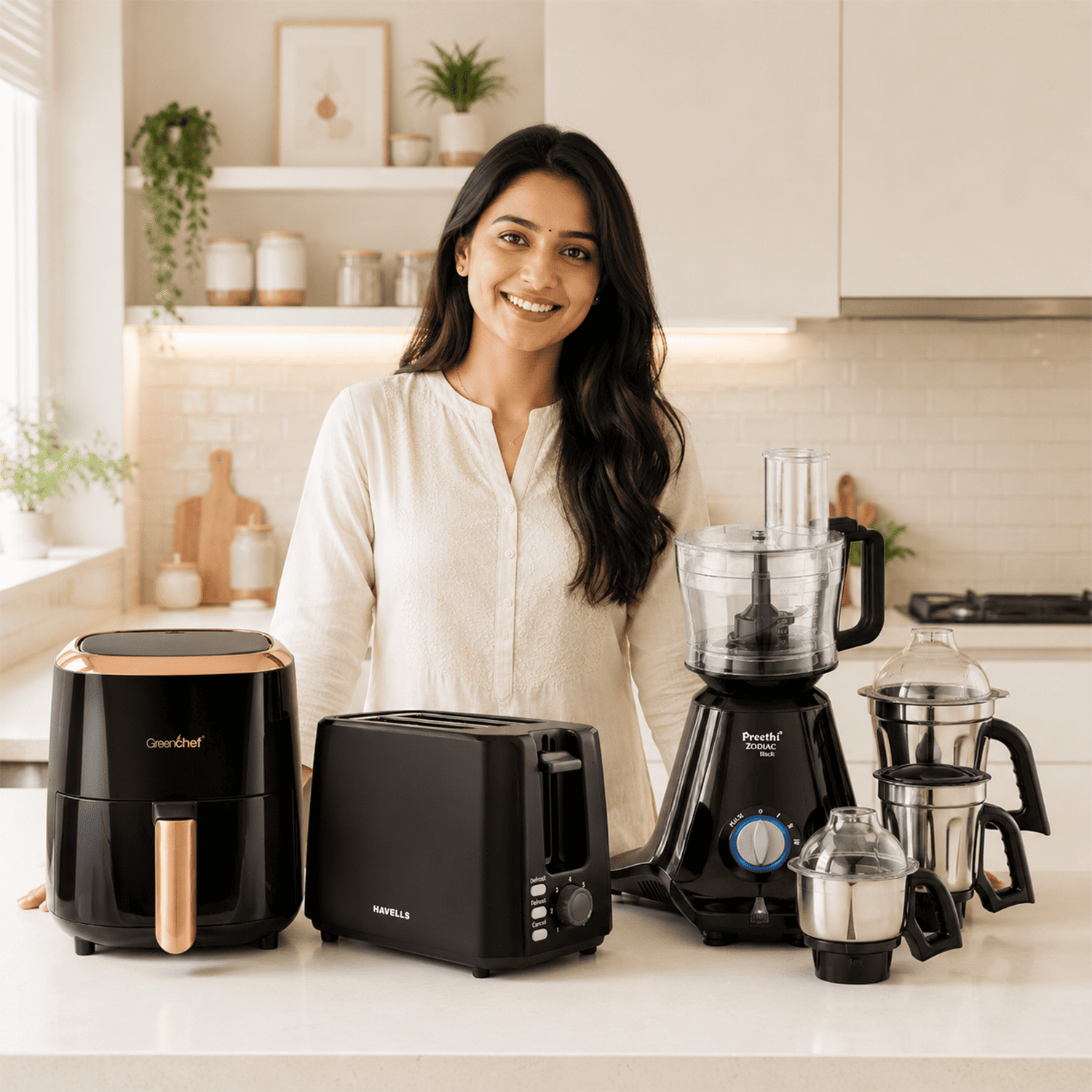
Top Kitchen Appliances for Small Indian Kitchens in 2026 Expert Picks
Space-Saving, Multi-Use Appliances Perfect for Compact Indian Kitchens

Annachy
Top 3 Must-Have Summer Essentials to Beat the Heat During a Super El Niño
Discover cooling essentials that help you stay comfortable, hydrated, and protected during extreme summer temperatures

Annachy
Top 10 Must-Have School Essentials for Your Kids
Everything your child needs for a smart, organized, and confident return to school.

Annachy
Back-to-School Checklist: Smart Picks for a Successful Academic Year
Everything students need to stay organized, confident, and ready for a successful school year.

Annachy
Ready, Set, School! The Ultimate Shopping Guide for Students
Everything students need for a confident, organized, and successful start to the new school year.